
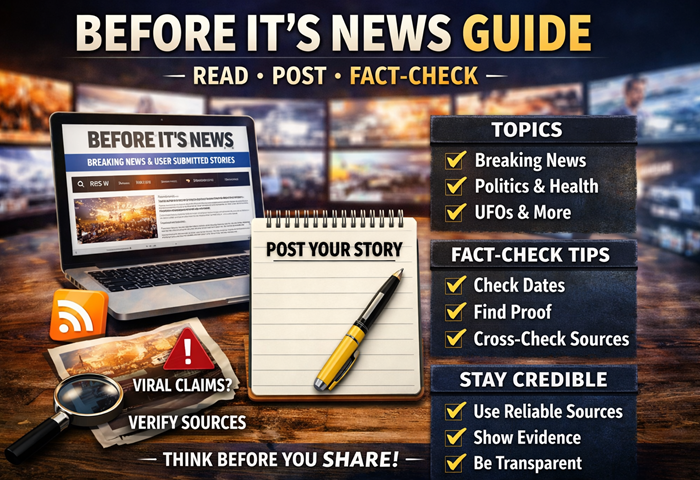
Introduction: why “before its news” keeps trending in search
People search before its news for a simple reason: they want stories early—or at least stories that feel “unfiltered.” Open publishing platforms can surface local tips, niche angles, and unconventional opinions that mainstream outlets might ignore. At the same time, openness also means uneven quality: you may see original reporting next to recycled rumors, clickbait, or claims with no evidence.
This guide is written for two types of readers:
-
Readers who want to use before its news as a discovery feed without getting misled.
-
Creators/publishers who want to post on before its news in a way that looks credible, ranks in search, and doesn’t burn trust.
We’ll cover how the platform works, how submissions and RSS feeds typically flow, what tends to go viral, and a practical verification toolkit you can apply in minutes.
What is before its news?
In plain terms, before its news is a community-driven publishing and aggregation website where users submit stories, links, and commentary. Instead of a traditional newsroom assigning beats and editors approving every piece, the platform lets contributors publish directly (or via feed), then categories and attention signals help surface content.
That model matches a wider definition of alternative media—sources that differ from established mass media in how they produce and distribute content.
Why the format attracts both great tips and shaky claims
Open systems can be powerful when:
-
someone close to an event shares an on-the-ground update,
-
a specialist explains a niche topic simply,
-
a local story gets national attention.
But open systems can also struggle when:
-
a sensational claim spreads faster than corrections,
-
a contributor posts a screenshot without provenance,
-
a headline is designed to trigger anger or fear.
Some watchdog lists and academic resources have criticized the site for hosting or amplifying conspiracy content in the past, so it’s smart to read with verification habits.
How before its news works behind the scenes
Think of before its news as a pipeline:
-
Submission (self-post, email, or feed)
-
Categorization / display
-
Attention and sharing
-
Long-tail search traffic
Submission options: self-posting and RSS
The site’s FAQ says you can “post it yourself” with real-time submission tools, and it also mentions RSS feed intake and email submission, with feeds subject to editor review.
What that means in practice:
-
Self-posting is usually the quickest route.
-
RSS can help publishers distribute regularly, but review is likely.
-
Email submission may be slower than posting directly.
Automation and aggregation
Like many large platforms, categorization can be partly automated. Independent descriptions of the site suggest the aggregation/categorization process is largely automated, organizing submissions by topic or channel.
Visibility: why “emotion” often wins
On any feed-based website, content that triggers emotion tends to get clicks. That doesn’t automatically make it true or false—it just means the algorithm of human attention is a factor. When you use before its news, treat “viral” as “popular,” not “proven.”
What people read on before its news (topic clusters)
Most content falls into predictable clusters:
-
Breaking events: storms, earthquakes, conflicts, emergencies
-
Politics and investigations: leaks, allegations, “what they won’t tell you”
-
Health and wellness: supplements, miracle cures, warnings
-
Science and tech: space, AI rumors, privacy and surveillance
-
Finance: markets, gold, inflation, central banks
-
Spirituality / unexplained: UFOs, prophecy, fringe theories
The mix is why fans keep coming back to before its news: you can find narratives that don’t appear on mainstream homepages. But it also explains why verification matters most in health and politics, where bad info can cause real harm.
A fast credibility checklist for before its news posts
Use this 10-step checklist whenever a post feels urgent or shocking on before its news:
1) Write down the exact claim
Example: “A new law bans X starting tomorrow.”
If you can’t state the claim in one sentence, it’s probably vague or emotional.
2) Identify the content type
Is it:
-
firsthand reporting,
-
a repost,
-
an opinion piece,
-
a speculative theory?
3) Check date and location
Old stories often re-circulate. Confirm the date, country, and city.
4) Find the original source
If the post cites “a report,” locate the report. If it cites “a scientist,” find their name and publication.
5) Look for primary evidence
-
official statements, documents, filings
-
peer-reviewed studies
-
raw video with verifiable context
-
multiple independent eyewitnesses
6) Cross-check with reliable outlets or experts
If the claim is major, you should be able to find at least one reputable confirmation or contextual explanation elsewhere.
7) Scan for manipulation patterns
Urgency, certainty, and “share before it’s deleted” are classic tricks.
8) Understand misinformation vs disinformation
“Misinformation” is incorrect or misleading information, which can spread with or without intent. Wikipedia A post on before its news can be wrong even if the author believes it.
9) Check whether the story benefits someone
Does the post push:
-
a product,
-
a donation,
-
a political agenda,
-
a paid newsletter,
-
a referral link?
10) Decide your action
-
Verified → share with sources
-
Unclear → label “unconfirmed” or don’t share
-
False → correct with evidence and context
A 10-minute verification workflow you can repeat
When you see a viral headline on before its news, do this:
-
Copy the headline into a search engine in quotes.
-
Search key names + the core claim.
-
Reverse-image search the main image (to detect recycled photos).
-
Check official sources (agency sites, press briefings, dashboards).
-
Look for a fact-check or expert breakdown.
-
If science/health: find the paper and read the abstract + methods.
-
If finance: verify numbers on primary data sources (filings, releases).
-
Re-check the date/time stamps.
-
Note what’s confirmed vs unknown.
-
Only then decide whether to share.
Using before its news this way turns it into an early lead feed instead of a final authority.
RSS feeds and syndication: a practical approach for publishers
If you run a blog and want consistent distribution through before its news, consider a syndication plan:
-
Publish on your own site first (canonical source).
-
Use your RSS feed for syndication if accepted.
-
Add a clear “Originally published on…” line in the syndicated copy.
-
Keep headlines consistent (avoid bait-and-switch).
-
Update your original post if facts change; then update the syndicated version too.
The platform’s FAQ notes RSS feeds may be reviewed and provides submission guidance.
Case study: fact-checking a “breaking” claim from before its news
Let’s pretend you see a post on before its news that says:
“A massive storm is about to hit X city tonight—evacuate now.”
Here’s how to verify quickly:
-
Step 1: Check the local meteorological agency or official weather alerts.
-
Step 2: Confirm the post’s timestamp. Is it from today or from last year?
-
Step 3: Reverse-image search the storm photo. Many “breaking” images are from older hurricanes.
-
Step 4: Look for local reporters or emergency management updates.
-
Step 5: If verified, share the official alert link, not the sensational post.
This process works for almost any category: health, politics, finance, disasters. The habit is more important than the topic.
Red flags to watch for on before its news
When you read before its news, slow down if you notice:
-
No author name or no track record
-
No links to primary sources
-
“Doctors hate this” style marketing
-
Claims that can’t be independently checked
-
Screenshots instead of documents
-
All-caps urgency or “share immediately”
-
A conclusion that asks for money/products before evidence
None of these alone prove a story is false, but together they’re a strong warning sign.
Commenting and community: how to engage without chaos
Open platforms work best when discussions are civil and evidence-based. If you comment on before its news posts:
-
Ask for sources politely (“Do you have a primary link?”)
-
Distinguish questions from accusations
-
Share corrections with evidence, not insults
-
Avoid dogpiling—one good source beats 20 angry replies
-
If you’re wrong, say so and update your comment
This keeps your reputation strong and improves the information environment.
Safety note: health and finance posts need extra care
Two categories deserve special caution:
Health
Health misinformation can harm people. If a post on before its news claims a cure, look for:
-
peer-reviewed research,
-
medical consensus,
-
clear dosage risks and contraindications,
-
warnings against replacing professional care.
Finance
Market rumors move money. If a post claims “guaranteed profits,” treat it as a red flag. Verify with:
-
official releases,
-
filings,
-
reputable data sources,
-
risk disclosures.
In both categories, your best move is to verify the primary data before acting.
Safety note: health and finance posts need extra care
Two categories deserve special caution:
Health
Health misinformation can harm people. If a post on before its news claims a cure, look for:
-
peer-reviewed research,
-
medical consensus,
-
clear dosage risks and contraindications,
-
warnings against replacing professional care.
Finance
Market rumors move money. If a post claims “guaranteed profits,” treat it as a red flag. Verify with:
-
official releases,
-
filings,
-
reputable data sources,
-
risk disclosures.
In both categories, your best move is to verify the primary data before acting.
FAQs about before its news
Is before its news “real news”?
It’s a user-submitted publishing platform. Quality varies widely, so treat it like a lead generator and verify important claims.
Can anyone submit to before its news?
The FAQ indicates users can post with real-time tools, and it also mentions RSS and email submission options.
Why do critics call it unreliable?
Some lists and library resources have cited examples of misinformation and conspiracy promotion hosted on the platform in past years.
What’s the fastest way to fact-check a post?
Write down the claim, find the original source, check dates, and cross-check with primary documents or credible outlets.
Conclusion: the smartest way to use before its news
Used wisely, before its news can be a place to discover early leads, niche viewpoints, and citizen reporting. Used carelessly, it can become a pipeline for rumors.
The difference is your process:
-
Read like a researcher: track sources, confirm dates, cross-check.
-
Share responsibly: don’t amplify what you can’t verify.
-
Publish like a professional: be transparent, cite evidence, correct mistakes.
Do that consistently, and before its news becomes a useful tool in your information toolkit—not a trap.
